
Navigating Legacy Systems: Modernization Strategies for Mature LMM Businesses
In many lower-middle-market (LMM) firms, growth gets squeezed not by lack of ambition, but by outdated systems quietly dragging the business down. You know the scene: your core operations still rely on software built a decade or more ago, patches piled up, integrations brittle, and teams spending more time firefighting than innovating.
The question isn’t whether to modernize—it’s how and when, so your next phase of growth isn’t limited by yesterday’s technology.
Short Summary
- Legacy systems often masquerade as “stable” but actually restrict growth and agility.
- Modernization isn’t IT maintenance—it’s a strategic enabler of scalability and long-term value.
- There’s no one-size-fits-all approach: successful LMM firms balance cost, risk, and impact.
- Data, integration, and architecture must evolve together for modernization to succeed.
- A phased roadmap helps minimize disruption while accelerating digital transformation.
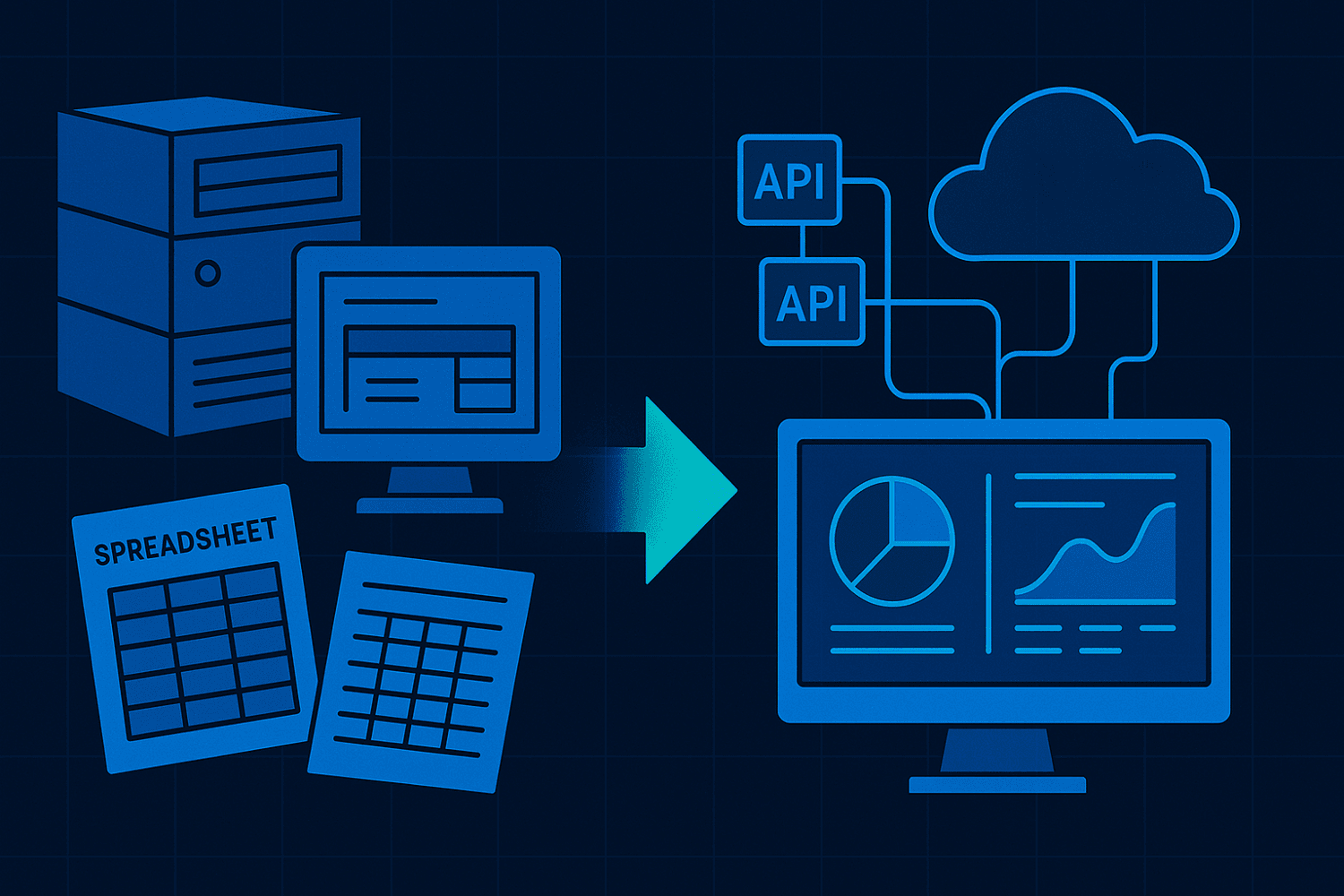
1. Why Legacy Systems Are More Than an IT Problem
If you’re running a mature LMM business, chances are your technology footprint includes:
These aren’t minor inefficiencies—they’re growth inhibitors. For an organization positioned for expansion, outdated systems increase operational risk and reduce responsiveness. The hidden cost isn’t just downtime or maintenance—it’s the opportunity you miss when your technology can’t keep up with your business goals.

2. Choosing Your Modernization Strategy
Modernization in the LMM space requires precision. Large enterprises can afford multi-year transformation programs; you need a plan that balances ambition with pragmatism.
Here are four common strategies:
Rehosting (Lift & Shift)
Move your applications to a modern environment—often cloud-based—without major code changes.
Best for: Reducing infrastructure risk quickly and freeing up capital.
Trade-off: Technical debt remains; performance gains are limited.
Re-platforming or Refactoring
Keep core logic but re-architect components for scalability, performance, and integration.
Best for: Businesses seeking agility and incremental transformation without full rebuilds.
Trade-off: Requires planning and investment but delivers significant medium-term ROI.
Rebuilding or Rewriting
Start over with a new architecture and codebase.
Best for: Systems that are unmaintainable, incompatible, or misaligned with your future model.
Trade-off: High cost, longer timeline, but maximum long-term payoff.

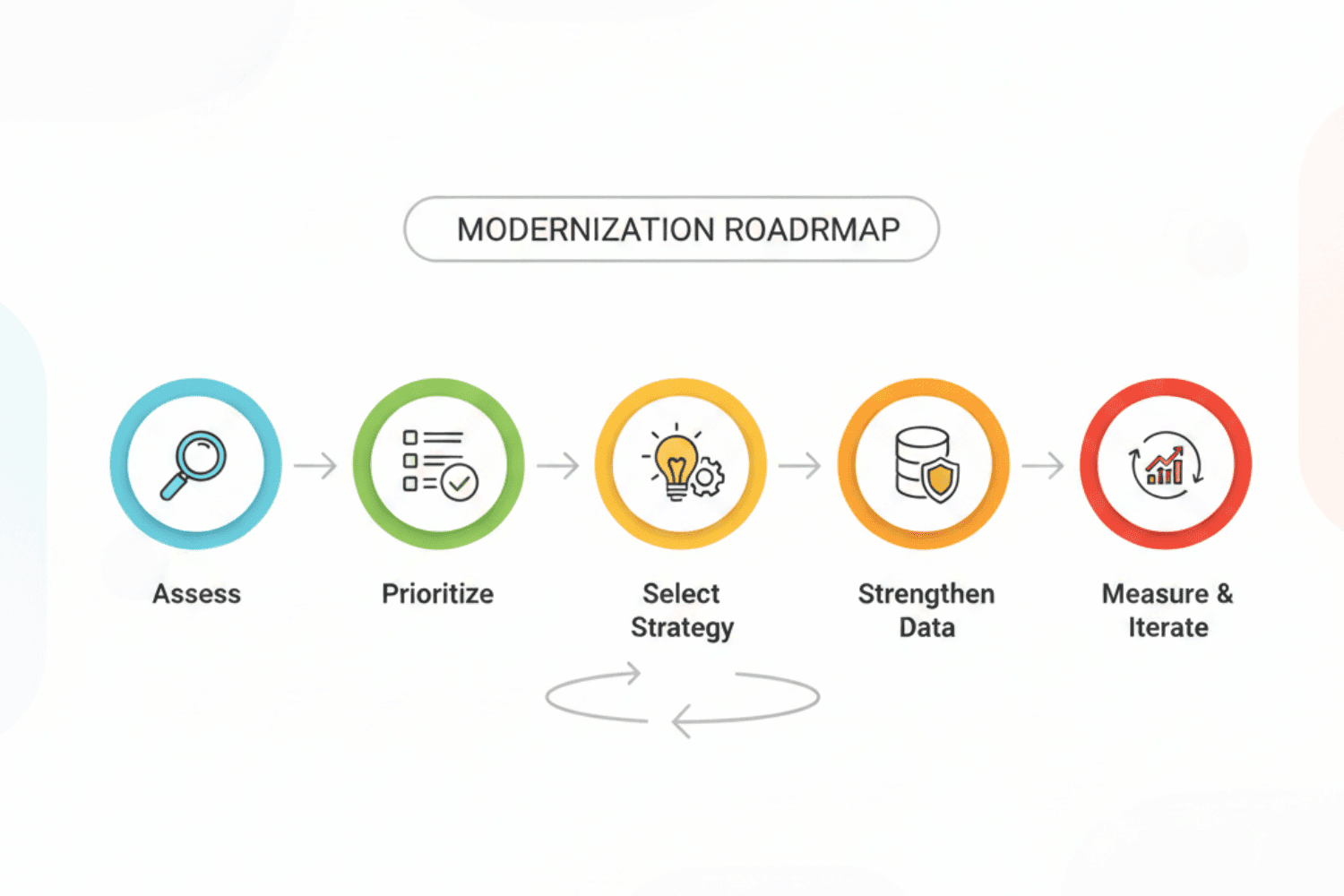
3. Building a Modernization Roadmap
Step 1: Assess Your Current State
Create a full inventory of applications, dependencies, and data flows. Evaluate each system based on:
Step 2: Prioritize by Business Value
Modernization should tie directly to growth outcomes—faster decision-making, improved customer experience, or easier integration post-acquisition. Focus on what drives measurable ROI.
Step 3: Choose the Right Strategy for Each System
Categorize each system as maintain, rehost, refactor, or rebuild. Then design a phased approach:
Step 4: Strengthen Data and Integration
Clean, connected data is the backbone of modernization. Align integration frameworks to ensure smooth communication between legacy and new systems, and build security and compliance into every phase.
Step 5: Measure and Iterate
Define success metrics—reduced maintenance costs, faster deployment cycles, improved uptime—and track progress consistently. Modernization should evolve with your business, not end when systems go live.
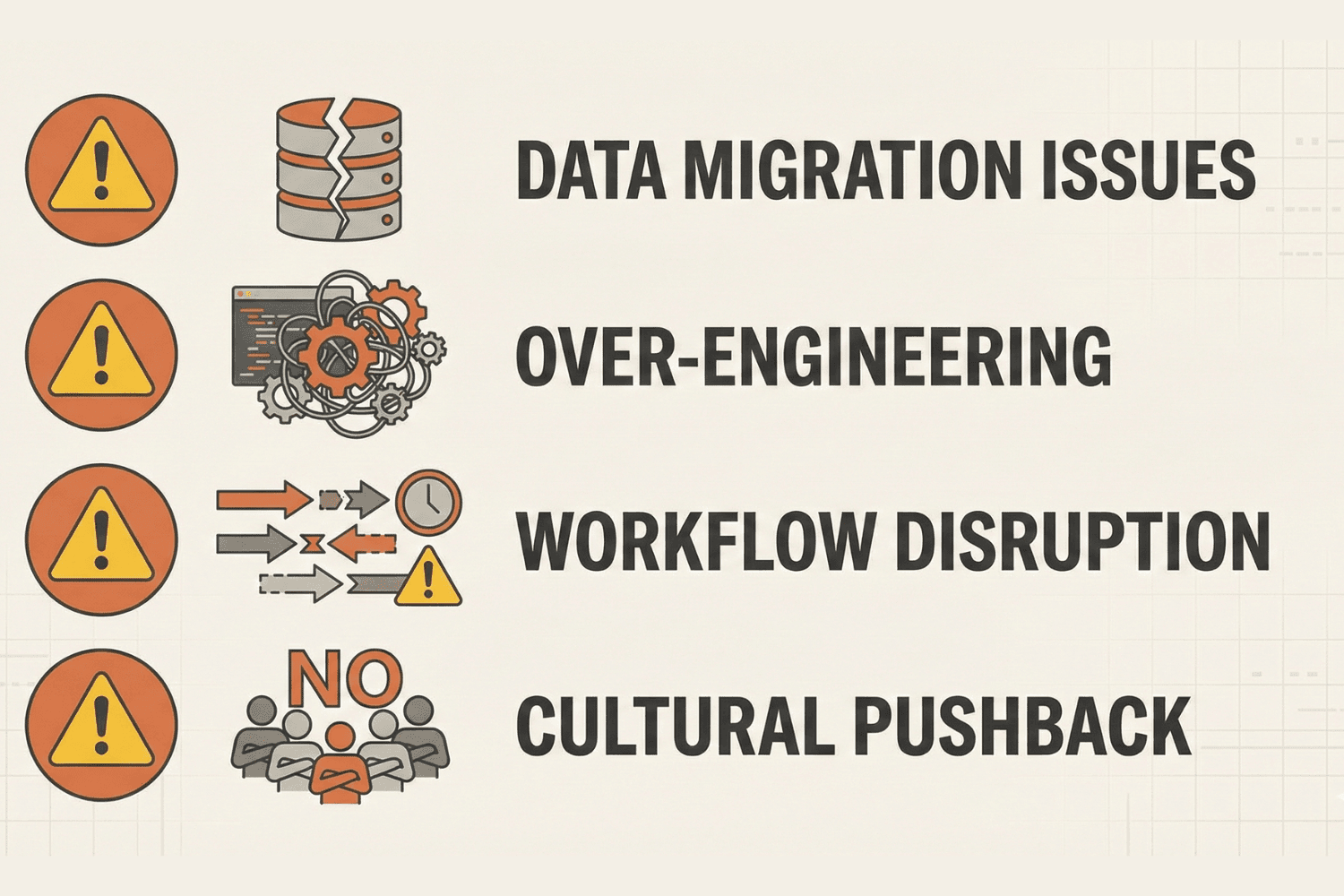
4. Common Risks — and How to Avoid Them
5. Modernization as a Growth Catalyst
For growth-oriented LMM firms, modernization goes far beyond replacing old software—it’s about unlocking agility. Whether your goal is a future acquisition, a new digital offering, or operational efficiency, your systems must evolve to support it.
When legacy technology becomes a barrier to speed, integration, or innovation, it limits enterprise value. By modernizing with intent—aligning systems to strategy—you turn IT into a competitive advantage rather than a cost center.
6. Next Steps Checklist
Summary
Legacy systems are the hidden handbrake on many mature LMM businesses. Modernization isn’t simply about keeping up—it’s about positioning for what comes next.
When approached strategically, modernization becomes a growth engine, enabling faster integrations, better data visibility, and improved scalability. The firms that treat modernization as a business initiative—not an IT project—are the ones that turn technology into long-term value creation.
It’s time to move beyond patching the past and start architecting the future.
FAQs
Do all legacy systems need to be replaced?
No. Focus on systems that constrain growth or create disproportionate risk. Many can be stabilized or integrated rather than replaced.
How long does modernization take?
Timelines vary. Quick wins like rehosting can be completed in months; deeper refactoring or rebuilding efforts may span one to three years.
How can we minimize operational disruption?
Adopt phased deployments, maintain parallel systems during transition, and engage end-users early for feedback.
How does modernization impact valuation?
Well-executed modernization improves scalability, reduces risk, and signals operational maturity—key factors in both investor confidence and market valuation.

Michael Fillios
Michael C. Fillios is the founder and CEO of IT Ally, a business and technology advisory firm for family owned and private equity backed small- and medium-sized businesses (SMBs). He is a former Fortune 500 global CIO, small business CFO, technology entrepreneur and management consultant with more than 25 years of experience. His first book, Tech Debt 2.0®: How to Future Proof Your Small Business and Improve Your Tech Bottom Line, was published by the IT Ally Institute in April 2020. His new book is, Tech Equity, How to Future Ready Your Small Business and Outperform Your Competition (IT Ally Institute, May 4, 2023). Learn more at itallyllc.com.

