
The Rise of Vertical SaaS: Opportunities for LMM PE Investment and Value Creation
In the lower middle market, technology no longer sits on the sidelines—it drives competitive advantage. As business models become more data-driven and workflows increasingly digitized, one trend is reshaping where value will be created over the next decade: Vertical SaaS.
Horizontal solutions try to be everything to everyone. Vertical SaaS goes deep into one industry’s operations, regulations, workflows, and revenue drivers. And for LMM private equity, this specialization represents one of the most compelling opportunities for expansion, operational uplift, and long-term multiples.
But here’s the real shift: Vertical SaaS isn’t just software—it becomes the operating system for the industry it serves.
Short Summary
- Vertical SaaS is expanding faster than horizontal SaaS, driven by tighter workflow alignment, industry-specific features, and niche customer loyalty.
- LMM PE has a unique advantage: Vertical markets are often fragmented, under-digitized, and ripe for modernization, roll-ups, or platform plays.
- Value creation spans multiple levers—recurring revenue expansion, product modernization, pricing optimization, professionalization of go-to-market, and AI-enabled workflow automation.
Why Vertical SaaS Is Outpacing Horizontal Solutions
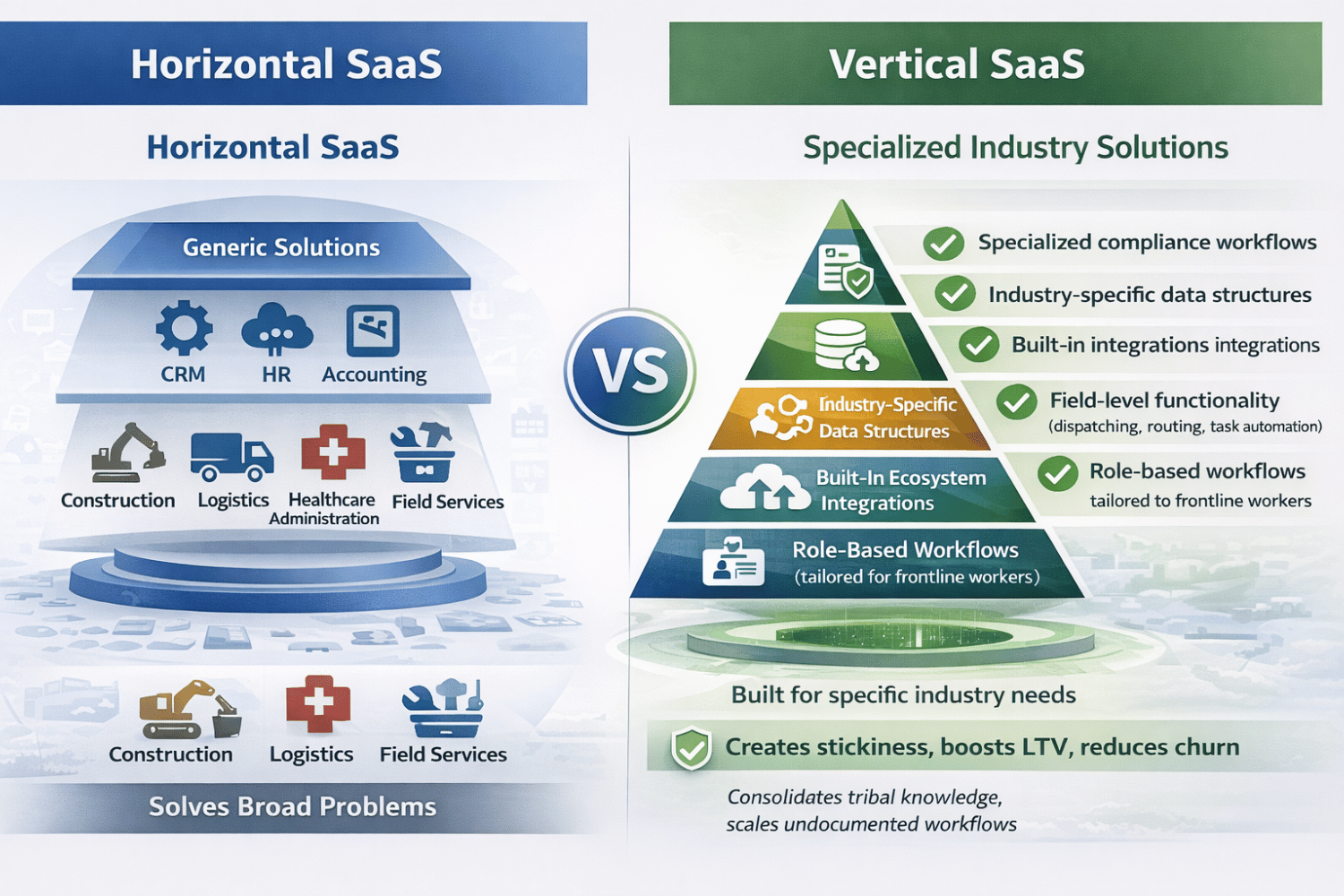
Horizontal SaaS solves broad problems—CRM, HR, accounting. But industries like construction, logistics, healthcare administration, field services, manufacturing, and veterinary care aren’t looking for generic systems anymore. They need tools built around the way they operate:

This depth creates stickiness, reduces churn, and drives higher LTV—precisely the kind of defensibility PE investors prize.
For LMM companies, where processes are still manual or fragmented, the impact is even more pronounced. Vertical SaaS becomes a replacement for tribal knowledge, consolidating decades of undocumented workflows into repeatable, scalable systems.
Why LMM Private Equity Is Perfectly Positioned
Most vertical markets remain underserved by large horizontal vendors. That gap creates an ideal playing field for LMM PE:
1. Fragmented industries create platform opportunities
Many sectors are still dominated by point solutions, legacy systems, or homegrown tools. A well-capitalized platform with modern architecture can quickly become the de facto choice.
2. Under-digitized workflows mean faster ROI
LMM operators often rely on spreadsheets, paper, outdated desktop software, or manual routing. Vertical SaaS delivers immediate efficiency wins that translate directly into EBITDA.
3. Pricing power is stronger
When software is embedded in mission-critical workflows, sensitivity to price decreases. Investors gain access to high-margin recurring revenue and predictable expansion.
4. Data becomes a strategic asset
Vertical SaaS owns the workflow data that drives predictive analytics, forecasting, and AI-enabled optimization. For buyers, this means:
It’s not just a software play—it’s a data monetization engine.
How Vertical SaaS Unlocks Value Creation Across the Hold Period
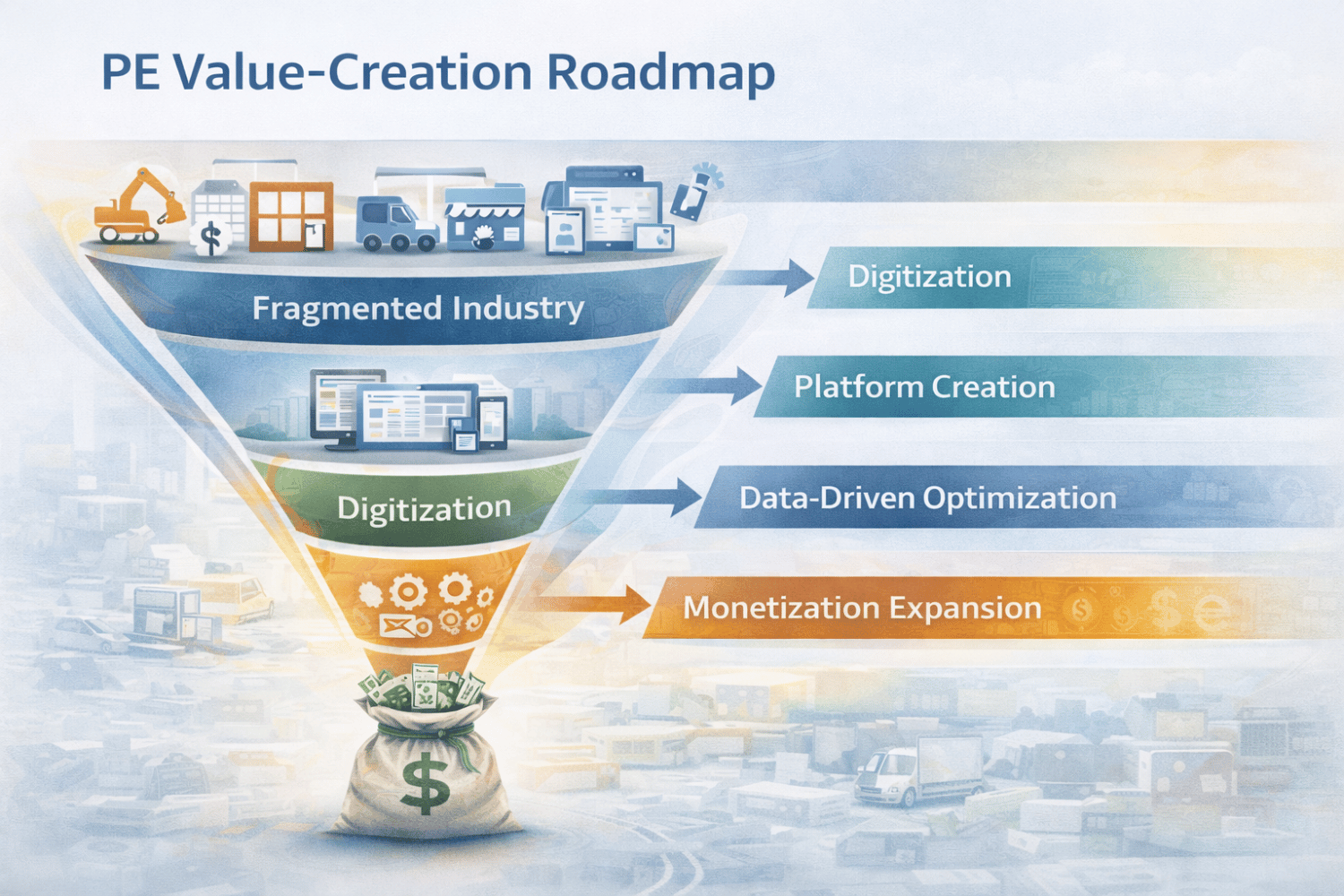
Vertical SaaS presents one of the clearest technology-led value creation roadmaps in the LMM. Across the lifecycle of ownership, investors can pull multiple levers:
Modernizing the Product Architecture
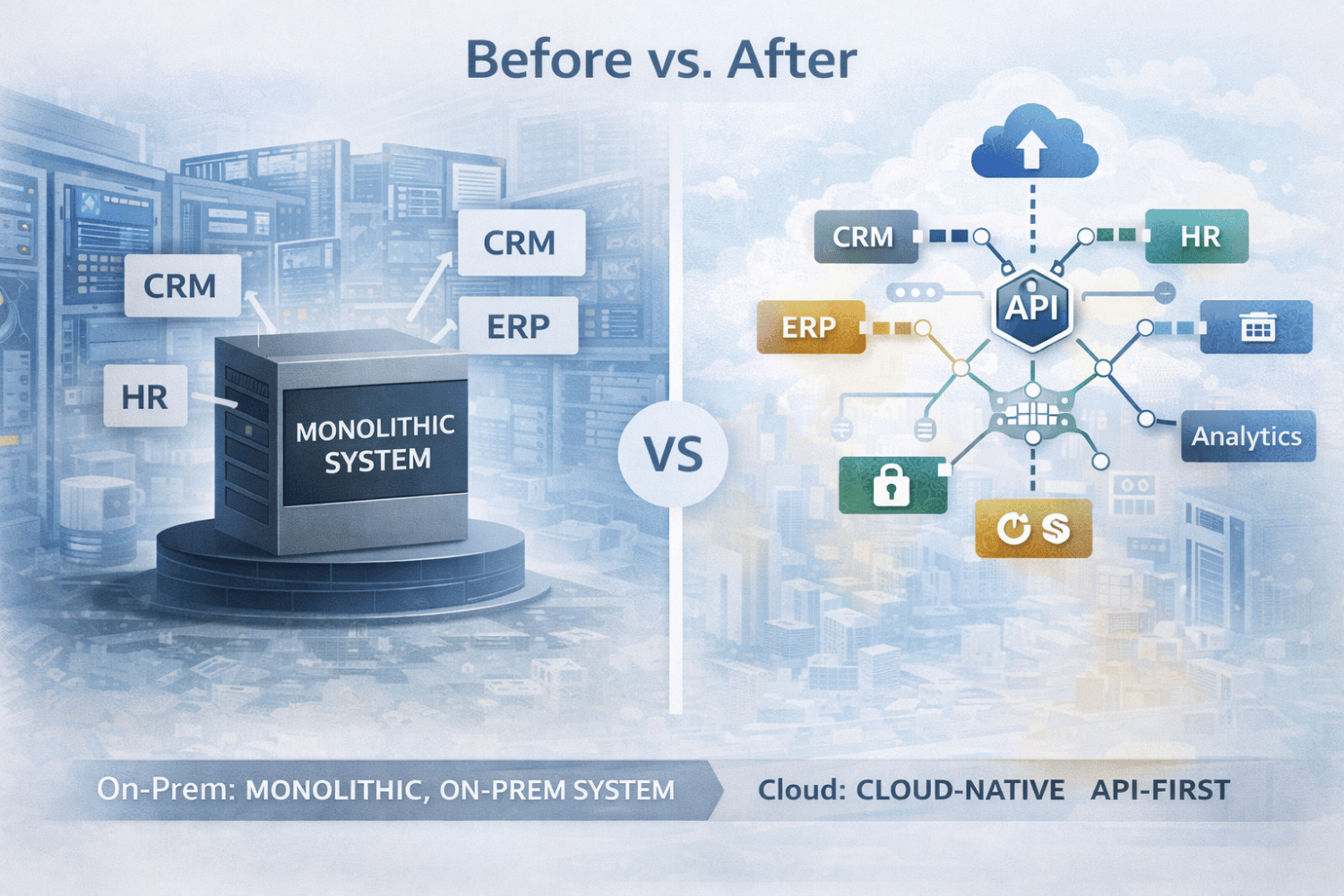
Most targets in the LMM still operate with:
Upgrading to modular, cloud-native, API-first architecture unlocks:
This modernization alone can materially impact valuation at exit.
Expanding Recurring Revenue & Upsell Pathways
Once industry-specific workflows are mapped, clear expansion levers emerge:
Vertical SaaS excels here because each buyer persona within the industry has distinct needs—and therefore distinct monetization opportunities.
Driving Operational Efficiency Through Embedded Automation
Automation inside Vertical SaaS tools provides some of the largest EBITDA lifts:
Because workflows are industry-specific, automation becomes highly targeted—and therefore far more effective.
AI and Agentic AI: The Next Expansion Frontier
Horizontal AI solutions will always struggle to understand industry-level nuance. Vertical SaaS has the opposite advantage:
It already owns the context, the data, and the workflow.
That makes AI materially more accurate, actionable, and trusted.
PE owners can introduce:
Agentic AI takes this further: It doesn’t just recommend actions—it performs them inside the workflow. For the LMM, this jump in labor efficiency and quality is enormous.

Strengthening Go-to-Market & Customer Success
Most LMM SaaS companies underinvest in professionalized GTM. That creates quick wins:
- Clarifying ICP + buyer personas
- Building layered packaging and pricing
- Rebuilding the website with vertical-specific messaging
- Installing modern sales and CS motion
- Implementing scalable onboarding
- Reducing churn through health scoring
- Improving NPS and driving user advocacy
Even modest upgrades here dramatically improve net retention and ACV expansion.
Preparing for Exit: Multiples Follow Maturity
Sophisticated buyers pay for:
Vertical SaaS that achieves these characteristics often outperforms horizontal peers on exit multiples—especially when data assets and workflow dominance are part of the story.
For LMM PE, that’s the playbook:
Turn a niche software company into the operating system of its industry.
Summary
Vertical SaaS is no longer a niche—it’s becoming the blueprint for how industries digitize, scale, and operate. For LMM private equity investors, the opportunity sits at the intersection of specialization, modernization, automation, and data-driven value creation.
Those who recognize the shift early will shape the next generation of industry platforms—and capture the disproportionate returns that come with them.
FAQs
What makes Vertical SaaS different from horizontal SaaS?
Vertical SaaS is built for one industry’s workflows, regulations, and roles—leading to stronger stickiness, higher LTV, and better monetization pathways.
Why is Vertical SaaS attractive for LMM private equity?
Because most vertical markets are still fragmented, under-digitized, and ripe for modernization—creating strong value creation levers.
Where does AI fit into the Vertical SaaS model?
Vertical SaaS owns the industry-specific data, which makes AI and agentic AI materially more accurate and actionable inside workflows.
What’s the fastest way to drive value post-acquisition?
Modernize the architecture, strengthen GTM, build targeted add-ons, and embed automation within the core workflows your customers rely on.

Michael Fillios
Michael C. Fillios is the founder and CEO of IT Ally, a business and technology advisory firm for family owned and private equity backed small- and medium-sized businesses (SMBs). He is a former Fortune 500 global CIO, small business CFO, technology entrepreneur and management consultant with more than 25 years of experience. His first book, Tech Debt 2.0®: How to Future Proof Your Small Business and Improve Your Tech Bottom Line, was published by the IT Ally Institute in April 2020. His new book is, Tech Equity, How to Future Ready Your Small Business and Outperform Your Competition (IT Ally Institute, May 4, 2023). Learn more at itallyllc.com.

