
Top Strategies for Building a Tech-Enabled Investment Thesis: Integrating Technology into Deal Sourcing and Due Diligence
What if AI could surface your next proprietary deal in hours, not weeks? Investment firms must integrate technology to stay competitive. By building a tech‑enabled investment thesis that fuses AI, data analytics, and NLP into deal sourcing and due diligence, firms streamline workflows, sharpen decisions, and uncover high‑quality opportunities—fast. This enhances efficiency, improves decision-making, and uncovers high-quality opportunities, positioning firms for success.
Key Takeaways
- Integrating technology, such as AI and data analytics, into deal sourcing transforms investment strategies by increasing efficiency, accuracy, and transparency in identifying high-quality opportunities.
- A successful investment thesis combines both relationship-driven elements and data-driven insights, allowing firms to leverage their networks alongside technology to enhance decision-making.
- The due diligence process benefits from technology through comprehensive assessments, risk identification, and real-time data utilization, ensuring thorough evaluation and informed investment decisions.

Building a Tech-Enabled Investment Thesis
Incorporating technology into your investment thesis is not just about staying current—it’s about gaining a strategic edge. A tech-enabled investment thesis leverages advanced data analytics, AI, and other technological tools to enhance decision-making and identify high-quality investment opportunities. This approach is crucial for private equity firms and venture capital firms looking to raise capital, maximize returns, and stay competitive in a rapidly evolving market.
Integrating technology into strategic planning provides actionable insights that inform investment strategies. The following subsections will explore how AI, natural language processing, and real-time data can be leveraged to build a robust, tech-enabled investment thesis.
Leveraging AI and Analytics for Strategic Planning
Artificial intelligence and analytics are revolutionizing strategic planning in the investment world. AI facilitates the identification of potential investment targets by analyzing market trends and delivering data-backed insights through investment research. This allows firms to stay ahead of industry trends and optimize their acquisition processes.
Integrating AI and analytics into business strategy allows private equity firms to make more informed decisions, enhancing operational efficiency and competitiveness. This data-driven approach empowers firms to strategically plan acquisitions that align with their investment thesis and deliver higher returns.
Integrating Natural Language Processing (NLP)
Natural Language Processing (NLP) is another powerful tool that can significantly enhance investment strategies. NLP technology processes unstructured data sources, facilitating the discovery of niche markets and providing customized data insights. This capability is crucial for uncovering hidden opportunities that might otherwise be missed.
NLP processes vast amounts of data from diverse sources, providing valuable insights that inform investment strategies. This not only enhances market analysis but also supports strategic planning and integration planning, making it a complex process and an indispensable tool for modern investors.
Utilizing Real-Time Data for Competitive Advantage
In today’s fast-paced investment landscape, access to real-time data is essential for maintaining a competitive edge. Real-time data allows firms to make swift, informed decisions, optimizing investment opportunities and improving market position. This capability is particularly valuable in volatile markets where timely information can make all the difference.
Real-time data enhances operational efficiency, enables swift reactions to market changes, and helps capitalize on emerging opportunities. This approach not only improves decision-making but also provides a significant competitive advantage in the investment world.
Enhancing the Due Diligence Process with Technology
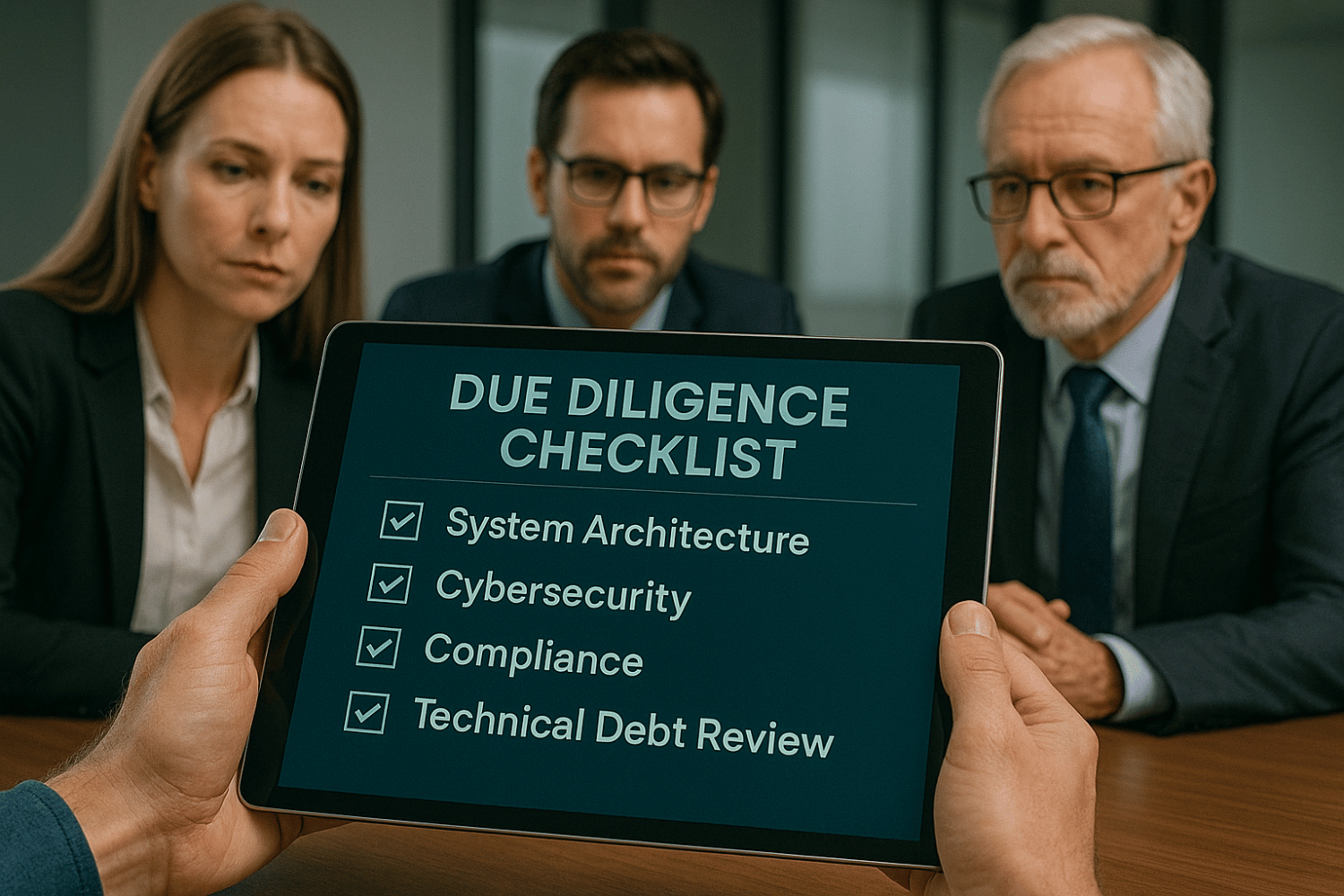
The due diligence process is critical for evaluating potential investments and to mitigate risks. Integrating technology into this process ensures thorough assessments and enhances overall transaction success. IT due diligence is essential as technology assets can offer significant value creation opportunities but also present material risks that need to be carefully evaluated in the context of business valuation.
Advanced technological tools streamline the due diligence process, improve operational transparency, and enhance KPI tracking. The following subsections will explore a comprehensive technology due diligence checklist, the importance of identifying technical debt, and assessing data quality and compliance, including technical diligence. Our diligence team will ensure all aspects are thoroughly evaluated.
Comprehensive Technology Due Diligence Checklist
A comprehensive technology due diligence checklist is essential for identifying risks and ensuring alignment with the investment thesis. This structured approach involves evaluating a potential target company’s systems, software architecture, and security posture to identify critical components and potential issues, including comprehensive technical assessments.
Using a detailed checklist enhances the identification of essential risks, helping firms avoid costly oversights and support the acquisition value creation plan. This comprehensive assessment is crucial for maximizing technology assets and ensuring a successful integration post-merger.
Identifying Technical Debt and Integration Challenges
Technical debt refers to the suboptimal technology infrastructure that firms might inherit during transactions. Recognizing this debt early can prevent unforeseen expenses and integration challenges. Understanding a target company’s IT capabilities, technical expertise, and potential risks is crucial for a smooth integration process.
Identifying technical debt and integration challenges during due diligence helps mitigate hidden business risks and ensures a successful acquisition. This proactive approach helps avoid complications that could arise from poorly documented processes and suboptimal technology systems.
Assessing Data Quality and Compliance
Evaluating data quality and compliance is a critical component of the due diligence process. Ensuring that personal information is collected, stored, used, and disclosed appropriately is essential for remaining compliant with regulatory requirements. Failure to address compliance deficiencies post-acquisition can lead to significant expenses, including potential cybersecurity and data protection upgrades.
Thorough assessment of data quality and compliance risk mitigation mitigates risks and ensures regulatory adherence. This approach not only enhances business continuity but also supports the overall success of the acquisition process.

Case Study: IT Ally’s Approach to Technology Value Creation
IT Ally is dedicated to helping private equity firms integrate technology into their investment strategies to maximize value. Their methodology focuses on comprehensive technology assessments, tailored strategies, and performance measurement to ensure optimal results.
The impact of IT Ally’s approach has been significant, leading to measurable improvements in productivity and operational transparency for portfolio companies. The following subsections will delve into IT Ally’s deal advisory services, value creation and preservation strategies, and success metrics.
Deal Advisory Services
IT Ally partners with lower middle-market private equity firms and their portfolio companies to provide tailored deal advisory services. Their offerings include a range of services such as:
The emphasis on technology assessments in their deal advisory services helps guide investment and operational decisions, ensuring alignment with the firm’s strategic goals. This approach has been instrumental in driving deal success and enhancing the overall value of investments.
Success Metrics and Real-World Impact
The success of IT Ally’s approach is reflected in the measurable improvements reported by their clients. Clients report a 30 % reduction in diligence cycle time, a 15‑day faster time‑to‑close, and a 20 % lift in portfolio‑company EBITDA, thanks to simplified workflows and greater transparency. These success metrics highlight the real-world impact of IT Ally’s tailored strategies and technology assessments.
With high user satisfaction ratings, IT Ally has proven its ability to deliver higher quality services and drive significant value creation for portfolio companies. This track record underscores the importance of integrating technology into investment strategies for achieving business objectives and competitive advantage.

Selecting the Right Technology Partners
Choosing the right technology partners is crucial for the success of any tech-enabled investment strategy. These partners play a vital role in enhancing operational efficiency and ensuring that technology investments align with the firm’s strategic goals.
The following subsections will explore key considerations for partner selection, evaluating cost structures and ROI, and the importance of long-term relationships.
Key Considerations for Partner Selection
When selecting technology partners, it is essential to:
Considering these key factors helps firms select strategic partners that align with their investment goals and deliver higher quality services. This approach helps in achieving better outcomes in deal sourcing and due diligence.
Evaluating Cost Structures and ROI
Understanding the cost structure of technology partners is crucial for making informed decisions about long-term investments. Evaluating both the cost and potential long-term return on investment (ROI) ensures that technology partnerships are financially viable and support the firm’s strategic objectives.
Informed decisions based on cost structures and projected ROI enhance operational efficiency and ensure the financial health of investments. This approach helps in maximizing the value derived from technology partnerships.
Importance of Long-Term Relationships
Long-term relationships with technology partners can lead to better support and innovative solutions over time. These relationships provide a foundation for ongoing collaboration, ensuring that organize multiple transactions are managed effectively and strategic goals are met.
A relationship-focused approach fosters trust and collaboration, leading to better outcomes in deal sourcing and due diligence. Prioritizing long-term partnerships helps firms achieve sustained success and competitive advantage.
Future Trends in Tech-Enabled Deal Sourcing and Due Diligence
As technology continues to evolve, future trends in deal sourcing and due diligence are poised to shape the investment landscape. Advancements in artificial intelligence and predictive analytics will play a crucial role in enhancing strategic planning and investment decision-making.
The following subsections will explore these trends and their impact on the investment world.
Advancements in Artificial Intelligence
Artificial intelligence is set to revolutionize investment planning through predictive modeling and strategic insights. AI and analytics tools can sift through large data sets to reveal patterns and insights that guide investment strategies. This capability enhances strategic planning and provides a competitive edge in the investment world.
AI helps firms stay ahead of industry trends and make informed investment decisions. This approach ensures that technology assets are utilized effectively to maximize returns and achieve business objectives.
The Rise of Predictive Analytics
Predictive analytics is increasingly becoming a cornerstone of modern investment strategies. Predictive analytics use historical data to forecast market trends and identify high-potential investment opportunities. This capability allows firms to anticipate changes in the market and make strategic acquisitions that align with their long-term goals.
Utilizing predictive analytics provides a strategic edge in deal sourcing by revealing insights that might otherwise go unnoticed. This data-driven approach enhances the decision-making process, ensuring that firms can capitalize on emerging opportunities and stay ahead of industry trends.
Summary
In the ever-evolving landscape of private equity and venture capital, integrating technology into investment strategies is not just beneficial—it’s essential. From AI-powered deal sourcing platforms to comprehensive technology due diligence checklists, technology enhances every step of the investment process. By leveraging AI, NLP, and real-time data, firms can make informed investment decisions, identify high-potential opportunities, and maintain a competitive edge.
As we look to the future, advancements in artificial intelligence and predictive analytics will continue to shape the investment landscape. By staying ahead of these trends and selecting the right technology partners, firms can ensure long-term success and maximize the value of their investments. Embrace the power of technology to transform your investment strategy and achieve your business objectives.
FAQs
What is IT Ally’s role in private equity?
IT Ally plays a crucial role in private equity by leveraging their business and technology expertise to preserve and maximize value for both investors and portfolio companies.
Who does IT Ally partner with?
IT Ally partners primarily with lower middle-market private equity firms and their portfolio companies.
What is the commitment of IT Ally as a technology value creation ally?
IT Ally is dedicated to enhancing client success through security, market competitiveness, informed decision-making, optimized technology investments, and increased enterprise value. This commitment positions them as a valuable partner in technology-driven growth.
What type of advisory services does IT Ally offer?
IT Ally provides a range of advisory services, including Deal Advisory, Value Creation and Preservation Advisory, as well as Artificial Intelligence and Analytics Advisory, and Talent Advisory. These services are designed to help organizations maximize value and leverage technology effectively.
How does IT Ally’s approach impact portfolio companies?
IT Ally’s approach enhances productivity, operational transparency, and overall value creation for portfolio companies, resulting in significant measurable improvements.

Michael Fillios
Michael C. Fillios is the founder and CEO of IT Ally, a business and technology advisory firm for family owned and private equity backed small- and medium-sized businesses (SMBs). He is a former Fortune 500 global CIO, small business CFO, technology entrepreneur and management consultant with more than 25 years of experience. His first book, Tech Debt 2.0®: How to Future Proof Your Small Business and Improve Your Tech Bottom Line, was published by the IT Ally Institute in April 2020. His new book is, Tech Equity, How to Future Ready Your Small Business and Outperform Your Competition (IT Ally Institute, May 4, 2023). Learn more at itallyllc.com.

