
The Untapped Potential: Why Lower Middle Market PE Must Prioritize Tech Value Creation
Lower middle‑market PE firms risk leaving millions in unclaimed enterprise value on the table when technology sits backstage. What if the next deal thesis began with AI instead of afterthought IT? Understanding this still‑untapped potential—and why LMM PE must champion tech value creation—can decisively elevate investor confidence and exit multiples.
This article lays out, in board‑room plain English, exactly how strategic tech—AI, automation, data analytics, and cloud—can intensify revenue momentum, streamline margins, and fortify operational resilience, all while sharpening competitive positioning in a market that never pauses.
Key Takeaways
- Technology is essential for creating value in lower middle market private equity, enhancing revenue growth and operational efficiency through investments in areas like AI, automation, and data analytics.
- Automation and data analytics significantly improve operational efficiency and decision-making, enabling firms to streamline processes, reduce costs, and drive better business outcomes.
- Robust IT governance and cybersecurity measures are critical for aligning technology initiatives with business objectives, protecting sensitive information, and ensuring the long-term success of investments.
The Strategic Importance of Technology in Lower Middle Market PE
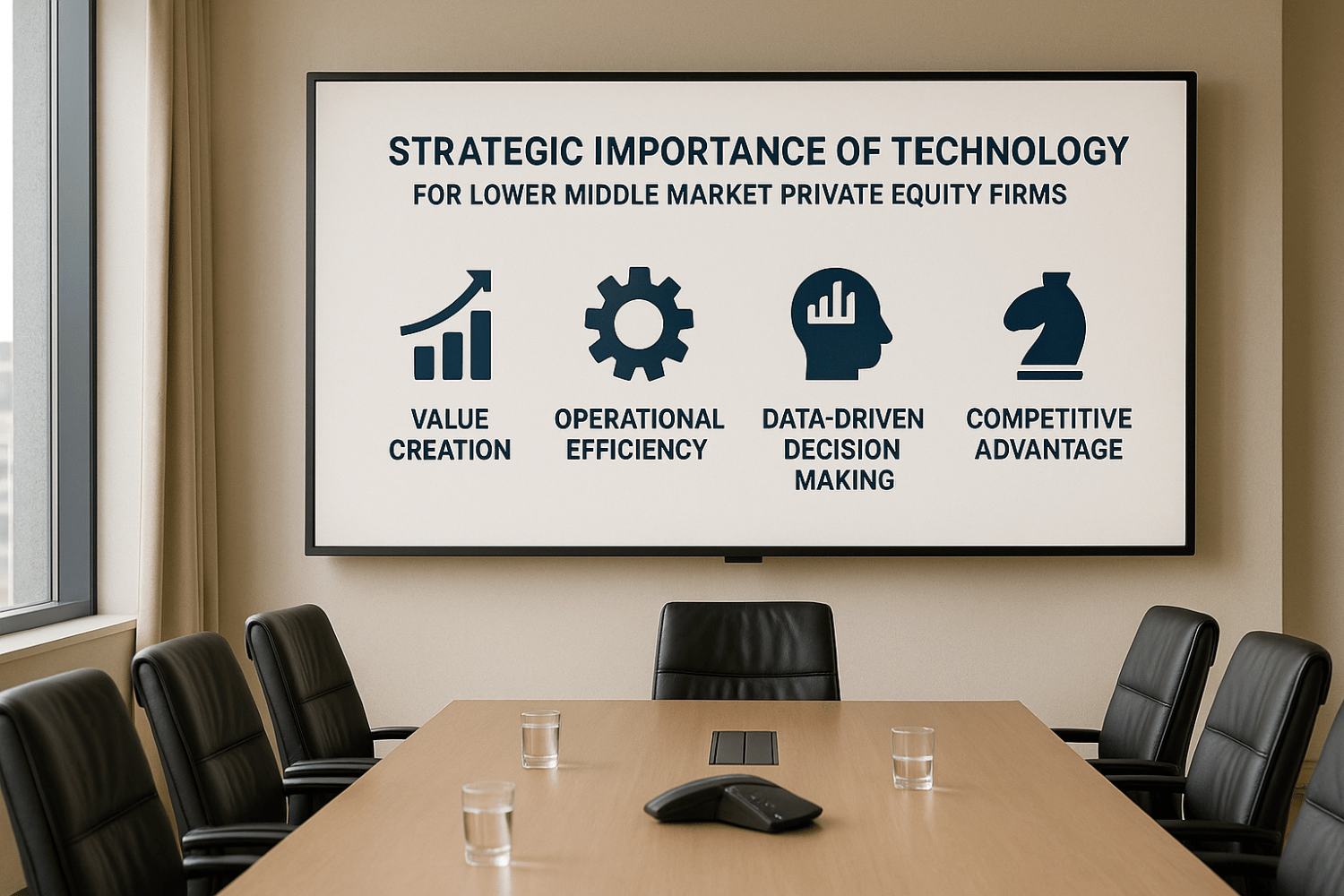
In the competitive landscape of private equity, technology plays a pivotal role in creating measurable outcomes and driving long-term objectives. For lower middle market companies, technology’s strategic importance is immense. An agile approach and thorough tech due diligence are crucial for value creation through technology. Investing in technology is crucial for growth in private equity portfolios; delays can lead to a loss of competitive edge, especially in fundraising and governance.
Well‑timed technology investments amplify revenue lift, compress operating expenses, and fine‑tune capital efficiency—all in concert—ultimately erecting a sturdier, more scalable value foundation beneath every portfolio company. By weaving predictive analytics into daily planning cycles, management anticipates market inflections far sooner and pivots product strategy proactively, while AI accelerates iterative innovation, ensuring portfolio companies outpace slower rivals and seize first‑mover advantage. The pandemic has further accelerated the adoption of new technologies, highlighting the need for private equity firms to keep pace with these advancements.
Moreover, involving employees in the decision-making process and providing ongoing support beyond initial training can significantly enhance the acceptance of new technologies and reduce resistance to change. Measuring the impact of technology investments is crucial to ensure they align with business objectives and contribute to overall firm goals.
Elevating technology to the top of the value‑creation agenda empowers LMM PE firms to sharpen investment strategy, sustain durable growth, and ignite top‑line acceleration that resonates throughout the hold period.
Automate Faster, Exit Richer
Automation has become a vital tool for private equity firms, enabling them to streamline operations and enhance value across various sectors. With around 80% of private equity workflows now heavily reliant on technology for deal sourcing and management, the impact of automation on operational efficiency is undeniable. Robotic Process Automation (RPA) is particularly effective in standardizing processes and improving operational consistency across portfolio companies.
The integration of AI with RPA creates a powerful framework for operational efficiency, allowing for data-driven automation that can significantly reduce costs and optimize resource allocation. For example, a lower middle market private equity firm employed an interim CFO to streamline its accounting processes, which resulted in a remarkable improvement in reporting speed from 35 days to just 14 days. Such operational improvements not only enhance efficiency but also contribute to better decision-making and overall firm performance.
When firms harmonize back‑office workflows, tighten inventory turns with data‑driven precision, and lean on next‑generation automation, operational excellence stops being a slogan and becomes a measurable KPI—one that fuels robust top‑line expansion from Day 1 of ownership through to the closing bell. The cost optimization, cost savings, and capital efficiency gained through automation can also enhance exit value, making portfolio companies more attractive to potential buyers.
Automation is the keystone strategy that converts repetitive manual effort into scalable digital throughput, cementing long‑term efficiency gains that compound quarter after quarter.
Leveraging Data Analytics for Better Decision Making
Data analytics has revolutionized the way private equity firms make business decisions, providing valuable insights into customer behavior, operational issues, and market trends. Predictive analytics, in particular, can forecast demand for products and services, aiding inventory management and resource allocation. By analyzing historical data and identifying patterns, machine learning models can improve operational decision-making and enhance overall firm performance.
A notable example is a private equity firm that utilized a business intelligence consultant to enhance operational insights in the construction sector, leading to increased company value. Similarly, another lower middle market PE firm achieved greater performance in staffing by implementing data-driven business intelligence solutions for PE investors.
Digital tools like RPA and AI enhance efficiency and support decision-making in private equity through digital technologies, helping firms stay competitive and achieve strategic goals.
Scale at Cloud Velocity
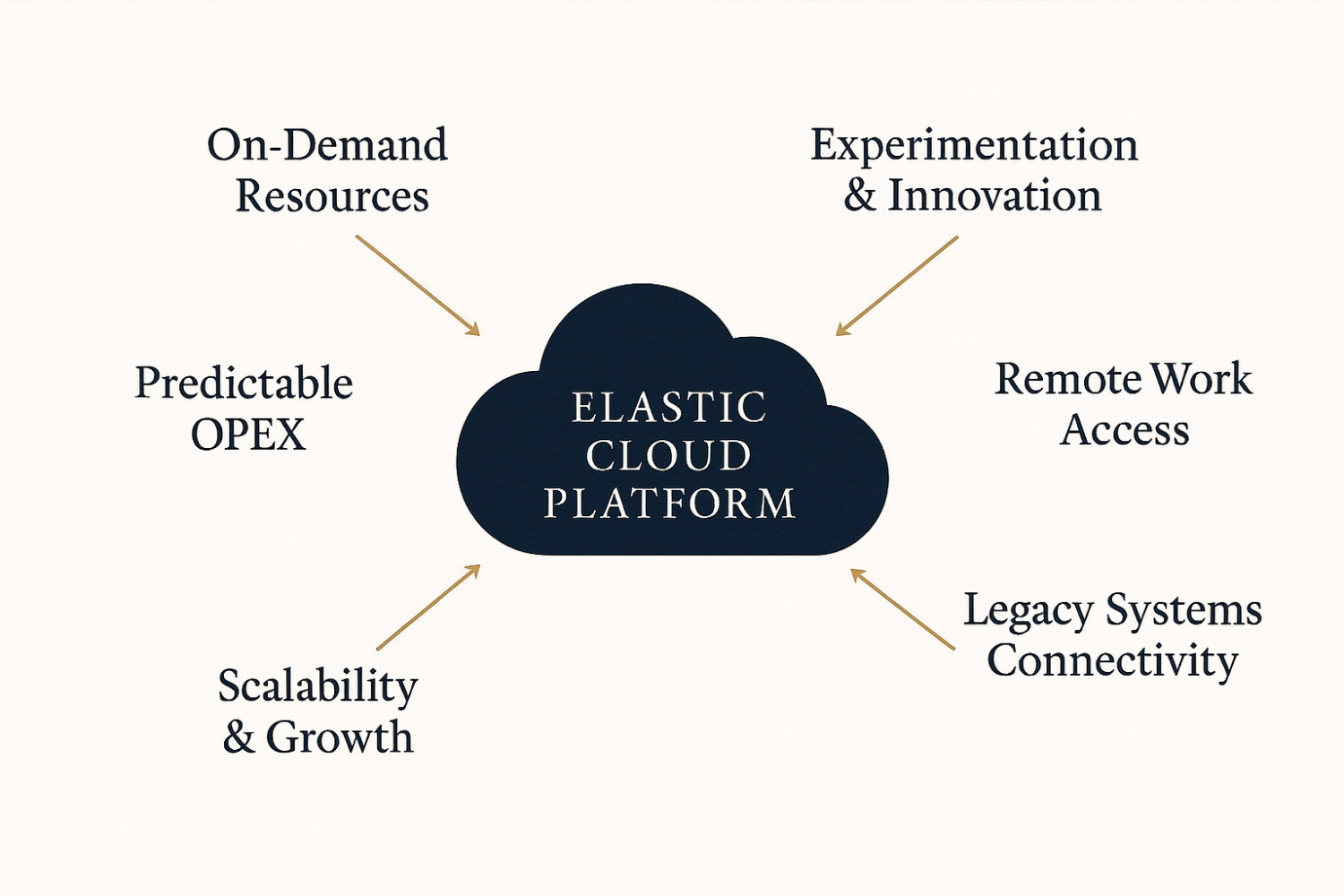
Cloud platforms act as an elastic growth engine, delivering right‑sized resources that expand—or contract—with real‑time demand, eliminating the drag of fixed infrastructure and freeing cash for higher‑yield initiatives. Cloud services enable firms to adjust IT resources according to demand fluctuations without significant delays, improving cash flow management by converting large capital expenditures into predictable operational costs. This cost-effective and low-risk environment encourages companies to experiment with new applications and services, driving innovation and growth, enhancing their cloud readiness.
The flexibility offered by cloud computing also enhances remote work capabilities, allowing access to legacy systems and data from various locations. This is particularly beneficial for private equity firms, enabling them to manage their portfolios more efficiently and respond to market volatility with agility.
Leveraging cloud solutions allows private equity firms to achieve greater scalability, optimize operations, and unlock new growth opportunities.
AI and Machine Learning for Innovation

The integration of artificial intelligence and machine learning into cloud infrastructure has paved the way for technological innovation, allowing businesses to adapt more quickly to market changes and customer needs. Cloud computing enables the rapid deployment of applications, accelerating time-to-market for products and enhancing the competitive edge of private equity firms. The flexibility of cloud platforms also supports remote work capabilities, providing access to systems and data from various locations and facilitating seamless collaboration.
Applying AI and machine learning ignites continual innovation, tunes every operational gear, and unlocks outsized value that reverberates across the portfolio. These cutting-edge technologies enable firms to stay ahead of the curve, anticipate market trends, and make data-driven decisions that enhance overall performance and growth potential.
Strengthening Cybersecurity Measures
In the digital age, cybersecurity has become a critical concern for private equity firms, which manage sensitive personal and financial information. Neglecting cybersecurity can lead to data breaches, financial losses, and reputational damage, making robust cybersecurity infrastructures and practices crucial. Effective cybersecurity investment can significantly reduce the likelihood and impact of cyberattacks, safeguarding digital and operational assets.
A strong cybersecurity posture not only protects data but also aids in maintaining investor confidence. Data analytics can help manage risks by detecting potential issues before they escalate, while data security awareness training for employees is crucial in recognizing phishing attempts and other cyber threats.
Integrating cybersecurity measures into IT governance frameworks mitigates risks associated with technological dependencies and ensures the safety of valuable information.
Investing in Research and Development
Investing in research and development (R&D) fosters long-term growth, allowing companies to introduce new products and enhance existing offerings. Sustained R&D investment fosters innovation, explores new technologies, and develops breakthrough products that can provide a competitive edge. Investing significantly in areas such as AI and quantum computing can result in driving growth through groundbreaking products. These innovations have the potential to create new markets and customer segments.
Nurturing environments that support exploratory projects and facilitating strategic alliances are crucial for fostering innovation. Encouraging a culture of innovation stimulates creativity, supports risk-taking, and drives continuous improvement through a well-defined creation strategy. Financial investment, cultural development, and strategic collaborations are key factors in nurturing an organizational mindset that drives innovation and enhances the tech portfolio value.
Building a Culture of Innovation

A culture of innovation is vital for companies looking to stand out from competitors and respond effectively to market changes. Organizations can foster innovation by providing tools and resources that allow employees to pursue creative ideas. Celebrating both successes and failures in innovation encourages a mindset where employees feel safe to experiment and take risks.
Removing bureaucratic barriers facilitates quicker decision-making and the implementation of innovative ideas. Diverse teams are more likely to generate creative solutions due to the variety of perspectives they bring, enhancing the overall innovative capacity of the organization.
Engaging employees in the innovation process can enhance their commitment and creativity, ultimately driving business success.
Strategic Partnerships and M&A for Tech Growth
Strategic partnerships and mergers and acquisitions (M&A) are powerful tools for driving tech growth in lower middle market companies. These initiatives enable companies to combine resources, knowledge, and expertise, acquiring innovative startups and expanding their market presence through add on acquisitions. Strategic acquirers provide access to new technologies and innovative solutions, helping companies stay competitive in fast-evolving markets.
Engaging in M&A can facilitate the unlocking of synergies, such as:
These synergies enhance overall efficiency. Lower middle market firms can achieve economies of scale, leading to:
Leveraging strategic partnerships and M&A allows private equity firms to drive growth, expand market share, and achieve business objectives.
Overcoming Challenges in Tech Integration
.

Rolling out transformative technologies often collides with human inertia and cultural friction, challenges that require as much change‑management finesse as technical know‑how. Overestimating benefits or underestimating resources can lead to disillusionment in technology investments, making it essential for firms to set realistic expectations and provide clear, achievable goals. Effective communication, training, and support systems are crucial for managing transitions and ensuring successful implementation of technology initiatives and digital transformation.
Conducting thorough due diligence is important to prevent unexpected challenges like system incompatibilities and cybersecurity vulnerabilities during technology integration. Aligning technology integration with strategic objectives and ensuring readiness of the technology infrastructure are key factors for successful implementation and addressing significant risks and potential risks.
Addressing these challenges proactively enables private equity firms to maximize technology investment benefits and enhance overall operational efficiency.
Governance and Compliance in Tech Initiatives
Robust IT governance is essential for aligning technology initiatives with broader business goals and managing associated risks effectively. Insufficient governance and oversight in technology initiatives can lead to misaligned priorities and inefficient resource allocation. Compliance with regulatory and industry standards in technology initiatives is vital to protect the firm’s exit valuation and ensure accountability and transparency.
An IT steering committee plays a vital role in overseeing technology strategy and ensuring alignment with business priorities. Establishing strong governance frameworks is necessary for aligning technology initiatives with strategic objectives, managing risks, and ensuring successful implementation.
Prioritizing governance and compliance helps private equity firms safeguard technology investments and achieve long-term success.
Summary
.In conclusion, prioritizing technology value creation is essential for lower middle market private equity firms to stay competitive and achieve sustainable growth. By leveraging cutting-edge technologies such as automation, data analytics, cloud computing, AI, and robust cybersecurity measures, firms can enhance operational efficiency, drive innovation, and create significant value for their portfolio companies.
Investing in research and development, building a culture of innovation, and leveraging strategic partnerships and M&A are also crucial strategies for driving tech growth. By addressing the challenges of tech integration and prioritizing governance and compliance, private equity firms can maximize the benefits of their technology investments and achieve long-term success. The journey to harnessing the untapped potential of technology value creation starts with a commitment to innovation and strategic investment in cutting-edge technologies.
FAQs
What is information technology due diligence?
Technology value creation is essential for lower middle market private equity firms because it boosts operational efficiency and fosters innovation, which ultimately enhances the competitiveness and sustainable growth of portfolio companies.
How can automation improve operational efficiency in private equity firms?
Automation enhances operational efficiency in private equity firms by standardizing processes and optimizing resource allocation through tools like Robotic Process Automation (RPA) and AI, ultimately resulting in reduced costs and improved decision-making.
What role does data analytics play in decision-making for private equity firms?
Data analytics plays a crucial role in decision-making for private equity firms by offering insights into customer behavior, operational challenges, and market trends, which facilitate improved decision-making. Additionally, predictive analytics and machine learning models enhance performance by forecasting demand and identifying patterns.
How can private equity firms ensure successful tech integration?
Private equity firms can ensure successful tech integration by setting realistic expectations, fostering effective communication, and conducting thorough due diligence. Additionally, aligning technology initiatives with strategic goals and providing adequate training and support for employees are essential for a smooth transition.
What is the importance of governance and compliance in technology initiatives?
The importance of governance and compliance in technology initiatives lies in their ability to align efforts with business objectives while managing risks effectively. This adherence not only promotes accountability and transparency but also safeguards the organization’s valuation and supports the successful implementation of technology projects.

Michael Fillios
Michael C. Fillios is the founder and CEO of IT Ally, a business and technology advisory firm for family owned and private equity backed small- and medium-sized businesses (SMBs). He is a former Fortune 500 global CIO, small business CFO, technology entrepreneur and management consultant with more than 25 years of experience. His first book, Tech Debt 2.0®: How to Future Proof Your Small Business and Improve Your Tech Bottom Line, was published by the IT Ally Institute in April 2020. His new book is, Tech Equity, How to Future Ready Your Small Business and Outperform Your Competition (IT Ally Institute, May 4, 2023). Learn more at itallyllc.com.

